
A quick but important note: Rabbits are prey animals and instinctively hide signs of illness. A rabbit that seems noticeably unwell may already be seriously ill. When in doubt, contact a rabbit-savvy veterinarian sooner rather than later.
Housing
Bigger than you think! Rabbits need room to hop, stretch out, and stand fully upright on their hind legs. Provide solid flooring, a hiding place, and a quiet area away from busy household traffic.
Wire-bottom cages aren't necessarily harmful if there is a generous solid resting area, but rabbits shouldn't have to spend all their time standing on wire. Solid flooring is a great option.
Diet
- Unlimited grass hay (such as timothy or orchard) should make up the bulk of an adult rabbit's diet.
- Quality pellets: Offer an appropriate, measured daily portion.
- Fresh greens: Introduce gradually, one at a time.
- Fresh water: Always available.
- Treats: Keep them occasional. Fruit is high in sugar!
Avoid large or sudden dietary changes. A sudden change in food, or introducing too many new foods at once, can upset a rabbit's delicate digestive system and cause serious gastrointestinal problems. When bringing your rabbit home, continue feeding the food provided by Moonbuck Rabbitry and make any changes gradually.
A rabbit that stops eating is an emergency. Don't wait to see if it improves on its own.
Watch the Poop!
Rabbit droppings tell you a lot about their health. Normal fecal pellets should be plentiful, round, dry, and fairly uniform in size.
Pay attention to changes:
- Smaller or fewer droppings can indicate reduced food intake or digestive trouble.
- Very small, misshapen, or unusually soft droppings deserve attention.
- Loose, watery diarrhea is an urgent veterinary concern.
- Soft, grape-like clusters called cecotropes are normal, but you generally shouldn't see large quantities left uneaten.
Changes in eating habits or droppings are worth taking seriously.
Grooming
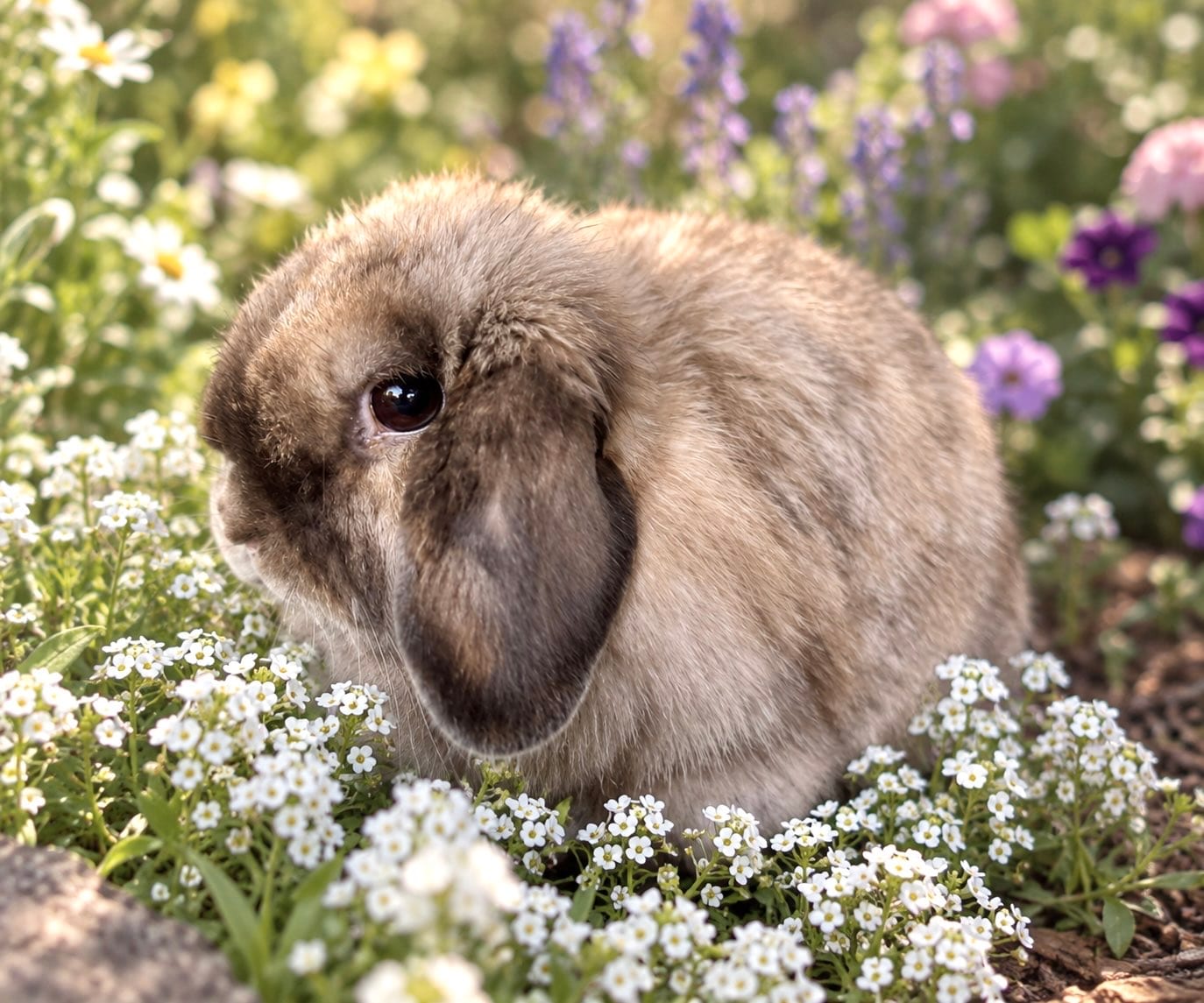
Holland Lops shed in cycles. Brush your rabbit during heavy shedding to help remove loose fur and reduce the amount swallowed during grooming.
Never bathe a rabbit. Baths can be extremely stressful and dangerous. Spot-clean dirty areas instead.
Handling
Always support your rabbit's hindquarters when lifting. Rabbits are prey animals, so approach calmly and at their level. Let them come to you, and keep early interactions on the floor rather than in your arms.
Many rabbits prefer affection on their own terms!
Nail Trimming
Trim nails approximately every 4–6 weeks. Make small cuts and avoid the quick (the blood vessel inside the nail). If you're unsure, I'm happy to walk you through it!
Veterinary Care
Find a rabbit-savvy exotic animal veterinarian before you need one. Many general veterinary practices don't treat rabbits, and an emergency is the worst time to discover you don't have a provider.
Seek prompt veterinary care if your rabbit:
- Stops eating or drinking.
- Produces very few or no droppings.
- Has watery diarrhea.
- Seems unusually quiet, lethargic, hunched, or uncomfortable.
- Shows signs of bloating or difficulty breathing.
Not eating, reduced droppings, and other sudden changes can become serious quickly. Don't wait a day or two to see if things improve.
General Tips
- Rabbit-proof cords and other tempting household hazards before allowing free-roam time.
- Litter boxes work! Most rabbits can learn to use one, especially when hay is placed nearby.
- Spaying and neutering: Talk with a rabbit-savvy vet about the benefits. Spaying females helps prevent serious reproductive diseases, and neutering males can help with hormone-related behaviors and prevent unwanted litters.
- Prevent boredom: Provide safe things to chew, toss, explore, and dig. A busy rabbit is often a much happier rabbit!
Please note: This page is intended as a general care guide and reflects our experience raising Holland Lops. We are not veterinarians, and this information is not a substitute for professional veterinary advice, diagnosis, or treatment. Always consult a rabbit-savvy veterinarian about health concerns.